Station 4 Geologiepfad Malbun: Wie entstehen Höhlen?

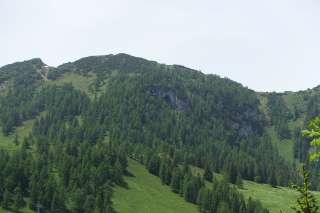
Lime is dissolved in water. Solution weathering is most easily applied where cracks give the water an opportunity to attack. Dolomite and gypsum rocks are also exposed to solution weathering. However, no caves are formed in them, because these rock walls crumble and disintegrate when weathered. The limestone rock walls are more stable and do not collapse. This small cave in the rock face in front of us and the large "bear holes" in the rock walls on the opposite side of the valley near Pradame are located in the same limestone.
Info:
The caves are also traces of the Ice Age
The natural rainwater is slightly acidic and can therefore dissolve limestone. Rainwater contains carbon dioxide from the atmosphere, which reacts with water to form carbonic acid. Resolution is very slow. A flat limestone plain would only be dissolved by rainwater by 25mm in 1000 years. When water flows, the dissolution process is faster. In addition, flowing water carries suspended matter and debris with it, which also mechanically grinds down the stone. The caves visible here are likely to date back to the time when flowing water at the edge of the glacier formed eddies and whirlpools here.


Entry updated on: 28.04.26, 01:57
Fehler melden (ID: tou_s9t_thvecutj-itrg-ejai-ivsd-ftrjeiqbaavd)